# Heroku

## What is Heroku? <a href="#what-is-railway" id="what-is-railway"></a>

Heroku is a container-based cloud Platform as a Service (PaaS). Developers use Heroku to deploy, manage, and scale modern apps.

## Requirements <a href="#requirements" id="requirements"></a>

* A credit card (for payment and verification).
* An email account.
* A [GitHub](https://github.com/signup) account.
* You have completed the initial steps: [invited your bot](/installation.md#create-a-discord-bot) and [created a MongoDB database](/installation.md#create-a-mongodb-database).

## Costs

Unfortunately, Heroku is no longer free-of-charge. You will need at least their Eco plan, which currently costs $5 USD per month. See their [pricing page](https://www.heroku.com/pricing) for more info and up-to-date prices.

If you are a higher-education student, you *may* be eligible for their [student offer](https://www.heroku.com/github-students), which grants you $13 USD of credits per month for 24 months—enough to host Modmail free for two years.

## Fork our GitHub repositories

You will need to fork our repositories to deploy onto Heroku.

Make sure you're logged in to [GitHub](https://github.com/). You will need to fork **two** repositories.

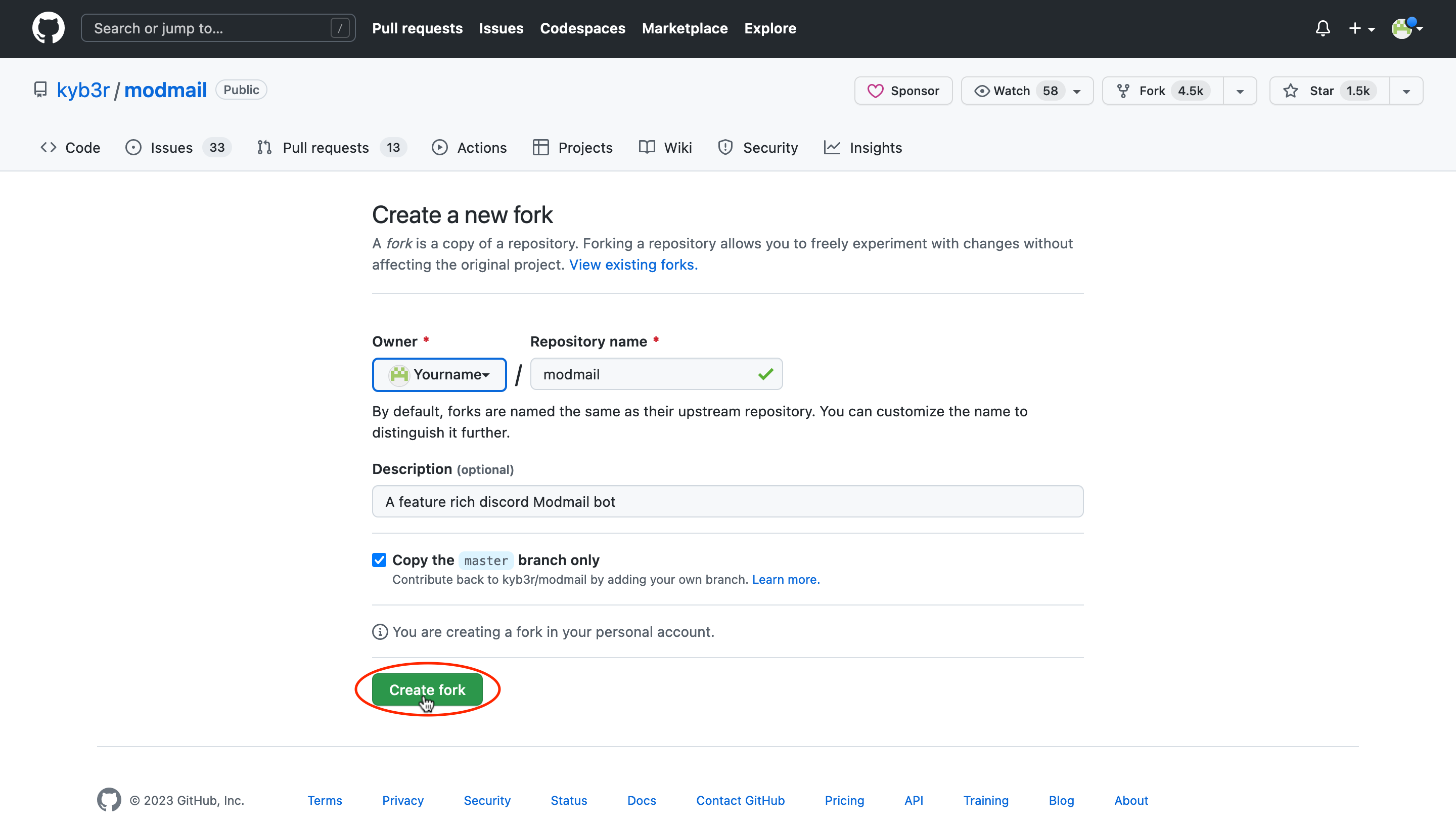
First we fork the Modmail repository. Head over to [https://github.com/kyb3rr/modmail/fork](https://github.com/modmail-dev/modmail/fork), leave all the settings as default, and click **Create fork**.

<figure><img src="/files/npG7kQ1AYyLZIzukvths" alt="Screenshot of creating a Modmail fork."><figcaption><p>Create a GitHub fork for the Modmail Repository.</p></figcaption></figure>

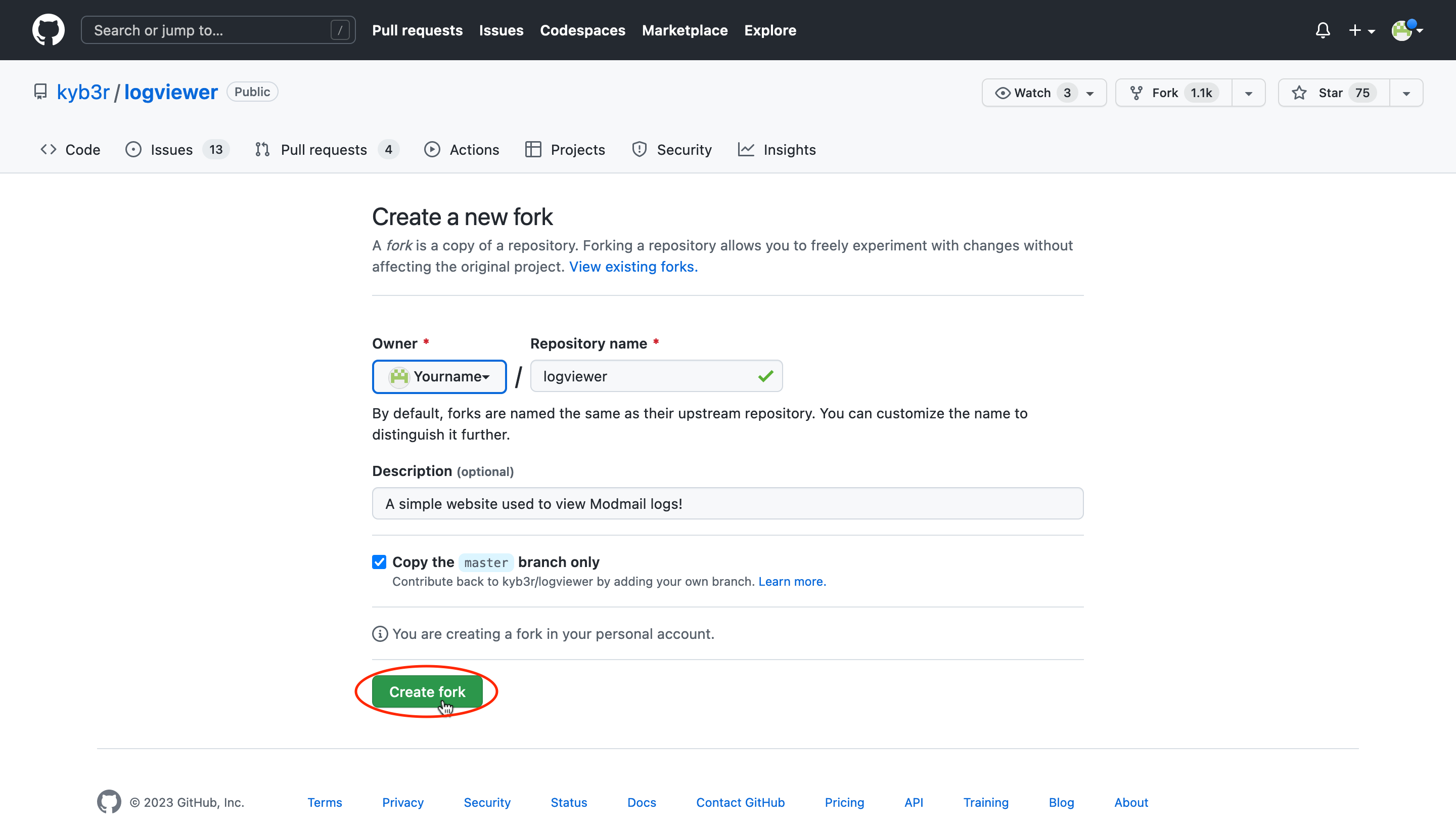
Next do the same for the Logviewer repository by heading over to [https://github.com/kyb3r/logviewer/fork](https://github.com/modmail-dev/logviewer/fork), leave all the settings as default, and click **Create fork**.

<figure><img src="/files/tnRcdKk5YanEfGXf8GPY" alt="Screenshot of creating a Logviewer fork."><figcaption><p>Create a GitHub fork for the Logviewer Repository.</p></figcaption></figure>

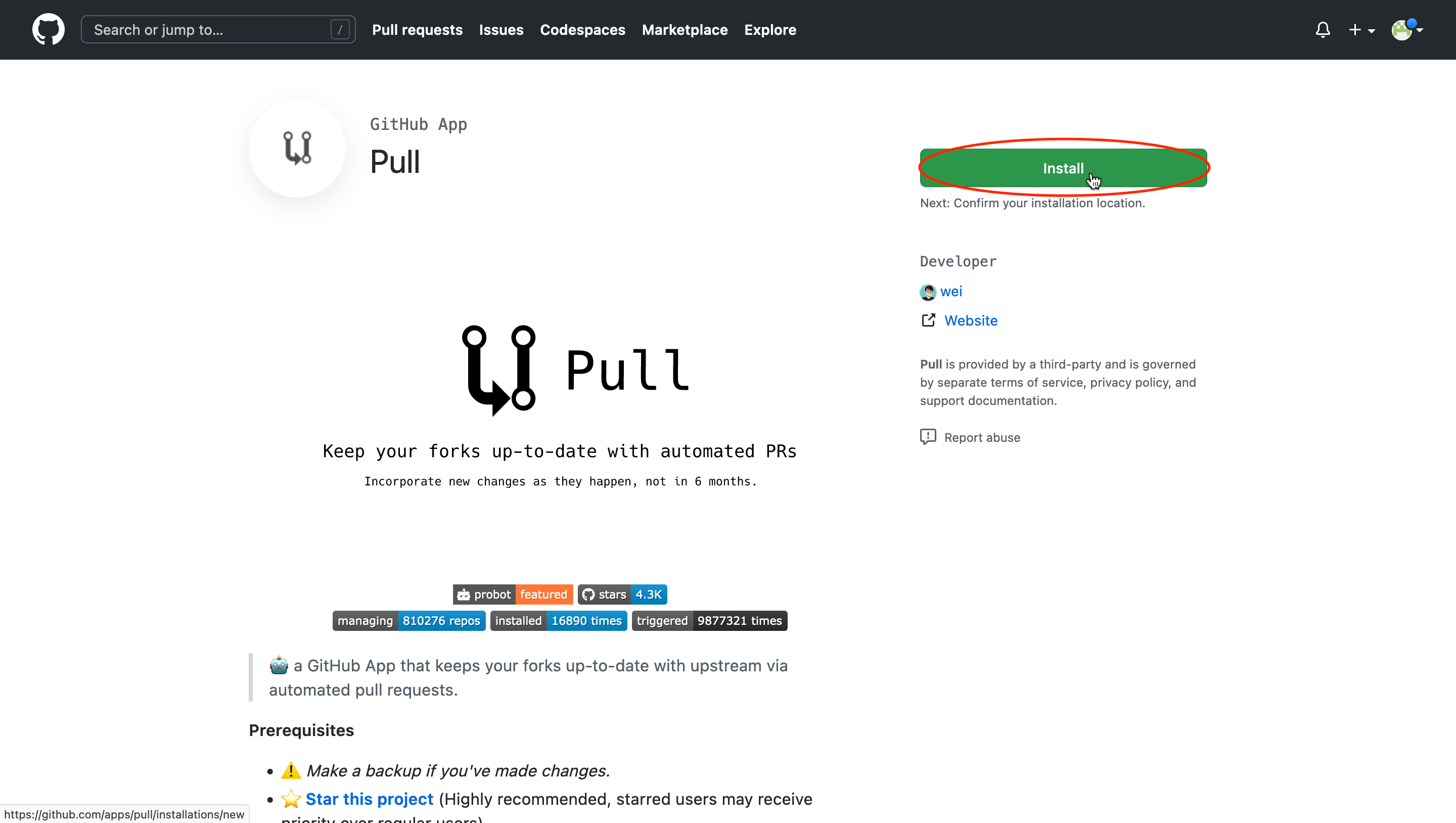
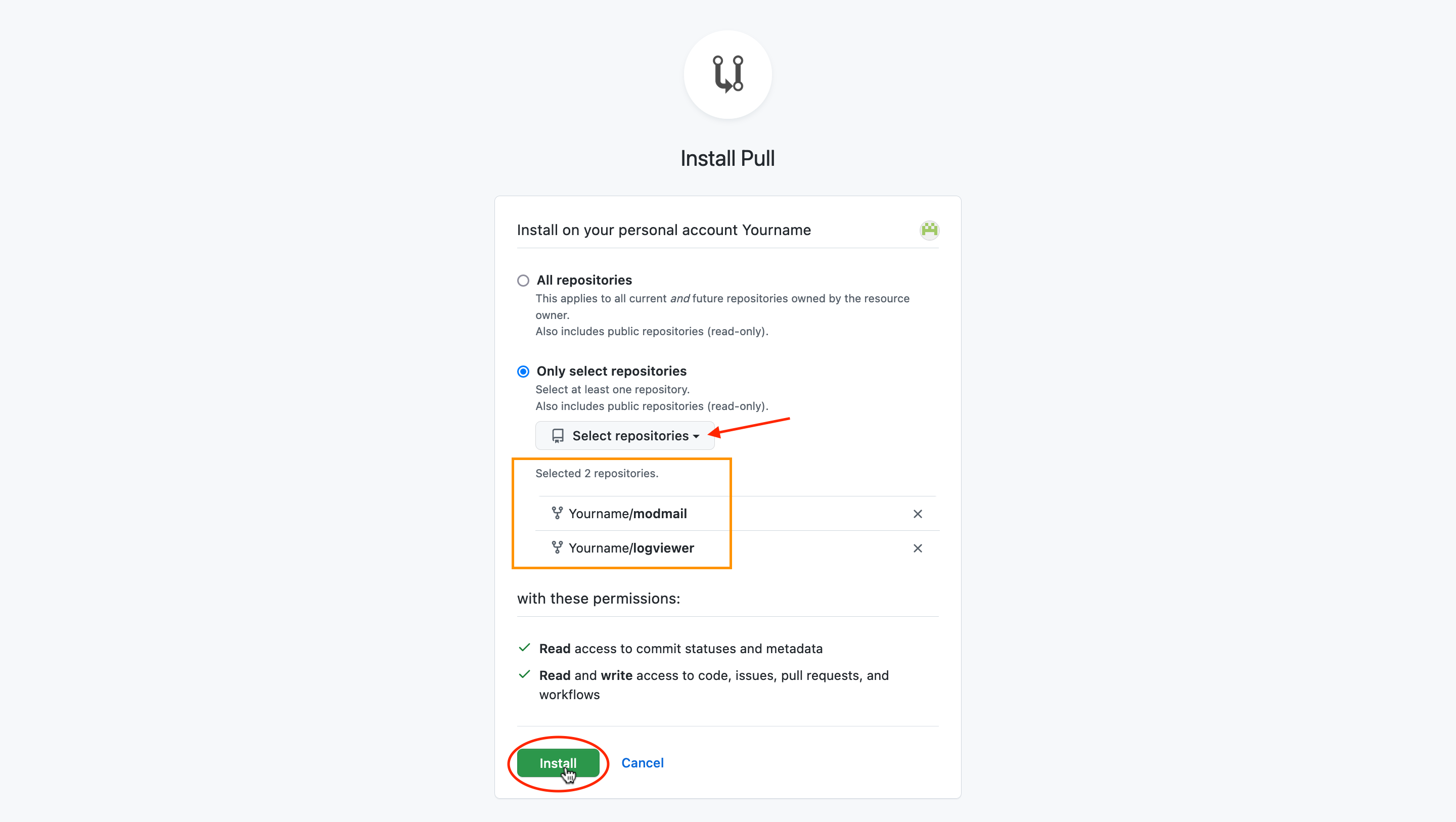
Next, to keep your Modmail and Logviewer up to date, you will need to install the [Pull app](https://github.com/apps/pull). Simply head over to <https://github.com/apps/pull>, click **Install**, choose **Only select repositories**, then select **both** the Modmail and Logviewer repositories that you forked in the previous step.

<div><figure><img src="/files/bz92GtqZJCgYV4DiLawH" alt="Screenshot of installing the pull app."><figcaption><p>Click <strong>Install</strong> to install the <a href="https://github.com/apps/pull">Pull app</a>.</p></figcaption></figure> <figure><img src="/files/Rtntx4NroRp97iZ1cDIV" alt="Screenshot of selecting both repositories."><figcaption><p>Select <strong>both</strong> the Modmail and Logviewer forks, then click <strong>Install</strong>.</p></figcaption></figure></div>

Your GitHub should now be all set. Next step, [create a Heroku account](#create-a-heroku-account) to deploy your bot.

## Create a Heroku account

## Updating


---

# Agent Instructions: Querying This Documentation

If you need additional information that is not directly available in this page, you can query the documentation dynamically by asking a question.

Perform an HTTP GET request on the current page URL with the `ask` query parameter:

```
GET https://docs.modmail.dev/installation/heroku.md?ask=<question>
```

The question should be specific, self-contained, and written in natural language.
The response will contain a direct answer to the question and relevant excerpts and sources from the documentation.

Use this mechanism when the answer is not explicitly present in the current page, you need clarification or additional context, or you want to retrieve related documentation sections.